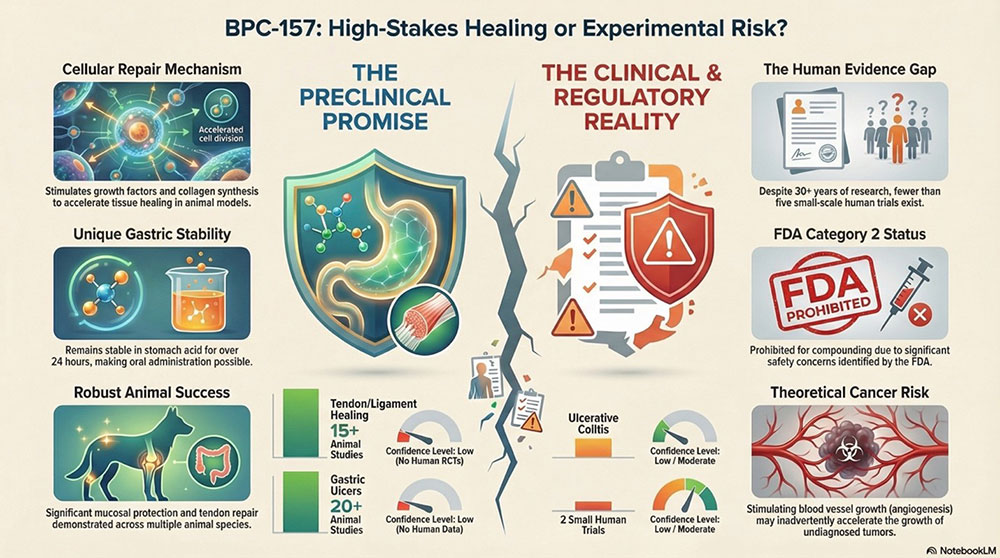
bpc 157 human clinical trials gut healing BPC-157: What the Science Actually Says Two peptides that researchers have
Description
From prescription GLP-1 medications to naturally occurring amino acid chains that influence hormones, weight loss peptides are now part of mainstream conversations about obesity and body composition

This code is used in healthcare facilities where complete diagnostic testing could not be performed or the results found are inconclusive

Peptides can help a wide range of patients, including those with: Crohns disease or ulcerative colitis Irritable bowel syndrome (IBS) SIBO or SIFO Leaky gut syndrome Mold illness or chronic Lyme disease Autoimmune conditions with GI involvement Long COVID with persistent GI symptoms NSAID-induced ulcers or gut permeability Sample Gut Healing Protocol (Integrative Approach) Phase 1: Reduce Inflammation and Microbial Overgrowth KPV (oral or suppository) LL-37 (subQ or intranasal) Herbal antimicrobials (berberine, oregano, neem) Mold detox (binders, nasal sprays if needed) Phase 2: Repair and Regenerate the Gut Lining BPC-157 (oral + subQ) TB-500 (subQ) GHK-Cu (topical or injectable) Collagen + L-glutamine Functional nutrition (AIP or anti-inflammatory diet) Phase 3: Rebalance and Rebuild Probiotics and prebiotics Fiber support (acacia, partially hydrolyzed guar gum) Short-chain fatty acid support (butyrate) Lifestyle: sleep, stress reduction, mindfulness Conclusion Gut healing isnt just about reducing symptomsits about restoring harmony between your immune system, microbiome, and intestinal lining
We're here to help you Get Started Today
Mistake 1: Using the wrong water volume This happens more often than you would think

Reviewed by the PeptideMind Team Updated July 6th, 2026 Free Peptide Blend Calculator Calculate exact draw volumes for peptide blends, stacks, and custom multi-peptide preparations